

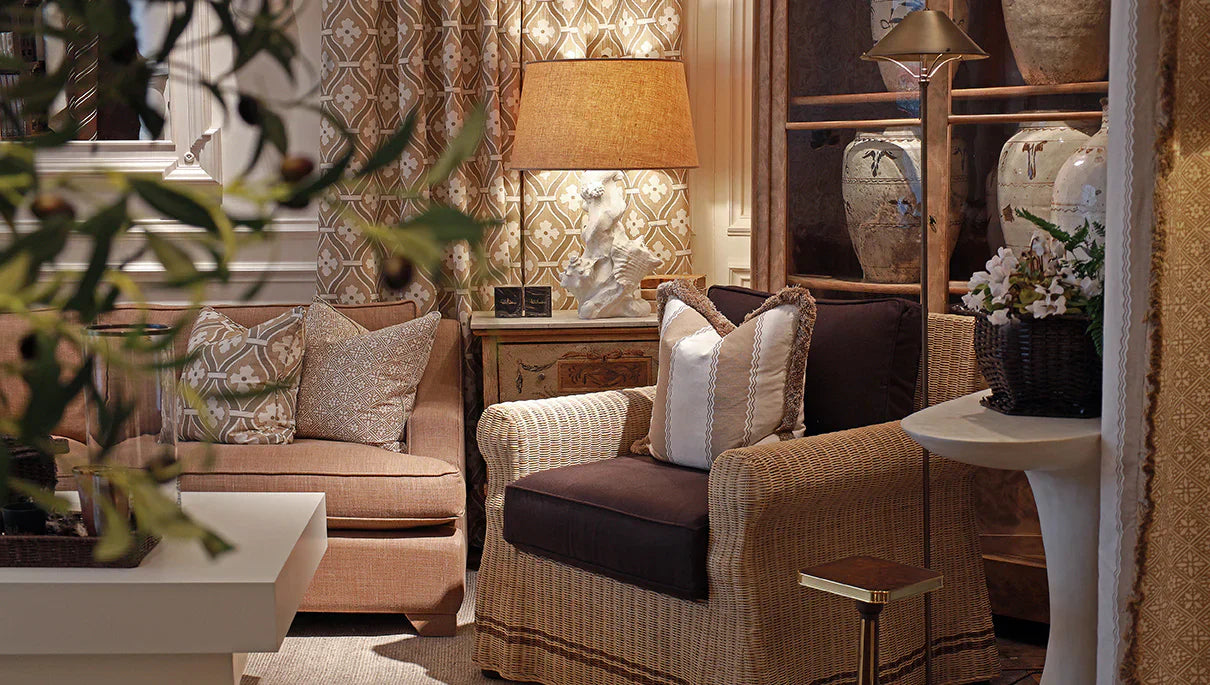
Step into a world of elegance and sophistication as we explore the transformative power of mirrors in interior design. Mirrors have become an essential element, illuminating small spaces and creating a sense of depth while bringing reflection and style into any room. Whether you aim to make a chic statement or enhance natural light, this guide is your companion in mastering the art of incorporating mirrors into your interior design.

Discover expert tips and tricks for selecting the perfect mirror for each room, optimising its placement for maximum impact, and creating stunning visual effects that will awe your guests. From traditional to contemporary styles, we’ll delve into various mirror designs, exploring their ability to amplify decor, complement furnishings, and reflect your unique sense of style. Consider, for example, how the Portofino Rattan Mirror or Caldera Mirror can frame seasonal greenery or enhance natural light through the warmer months.

Embark on this journey with us as we unravel the secrets of using mirrors in interior design, inspiring you to embrace their transformative power in your own space. Let’s elevate reflection and style to the forefront of your interior design.
How Are Mirrors Utilised in Interior Design?
Mirrors have evolved beyond mere grooming tools, transcending their conventional uses to become dynamic elements in interior design. They serve not only as functional objects for personal grooming but also as powerful design tools capable of fundamentally transforming living spaces. One of their pivotal advantages lies in their remarkable ability to create the illusion of a larger room. By reflecting and dispersing light throughout a space, mirrors possess the magic to open up even the most modest rooms, instilling a sense of expansiveness and airiness.

For example, the Denali Mirror, with its stonecast frame modelled on a natural tree trunk and hand-painted finish, brings both organic texture and understated elegance to an interior. Ideal for amplifying light and creating a feeling of greater space, it also serves as a statement piece that bridges natural forms and refined craftsmanship.
Beyond their spatial influence, mirrors play a strategic role as focal points within a room. Thoughtfully positioned mirrors draw attention to specific areas or features, injecting visual interest and depth into the overall decor. Their unique capacity to reflect and amplify the inherent beauty of surroundings makes mirrors an invaluable addition to any aesthetic, seamlessly integrating into diverse interior design schemes.
In the realm of interior design, mirrors present a canvas of endless possibilities. Whether your aim is to evoke a sense of luxury, infuse a touch of glamour, or make a bold statement, mirrors prove to be versatile accessories that cater to diverse design preferences. Their adaptability to complement any style positions is an indispensable component for design enthusiasts, contributing to the holistic visual appeal of interior spaces.
Tips For Where to Place Your Mirror In Your Home
When it comes to placing mirrors in your home, strategic positioning can significantly impact both visual appeal and functionality. Here are some key suggestions for placing mirrors in different areas:
Hang Next to or Opposite Windows to Increase the Light
Mirrors should be hung where they can reflect natural light to help a room feel brighter. A mirror will generally reflect the most light when it is hung opposite a window, but it will also capture and reflect a significant amount of light when it is placed next to a window.

Consider the Cecilia Mirror, with its elegant shell-adorned frame, positioned opposite a window to bounce daylight deep into your room while adding an artisanal touch to your decor.
You can create a more airy and brighter atmosphere in the room all day long by using a mirror in this way. Your newly installed mirrors will enhance any available natural light, even in the absence of sunlight or cloudy weather.
Using Artificial Light Reflection to Brighten an Area
Don’t be afraid to use mirrors to reflect artificial light as well as natural sunlight. When designing the interior of a space with minimal or no windows, make use of mirrors to maximise the available light.
The amount of light created by a mirror can be significantly affected by its placement in relation to a desk lamp, wall light, or floor lamp. Furthermore, the mirror will amplify and diffuse light without producing a chilly or harsh atmosphere.
Establish a Focal Point
Mirrors can be used to accentuate already-existing elements, like mantels, but they can also stand alone as statement pieces. Mirrors can be used to draw attention to a focal point in a room that doesn’t already have one.

For example, a carved, elaborate mirror like the Rococo Mirror can have the same impact as a sculpture or painting, blending drama with function. Coloured mirrors can be whimsical and enjoyable. Make a focal point on one wall with smaller pieces if you don’t want to hang a big, bulky mirror.
To Make Smaller Spaces Feel Larger, Recreate Windows
Many spaces in a home, such as hallways and bathrooms, may lack windows and natural light. These areas can be instantly made to feel larger by hanging a mirror to simulate a window.
In addition, a mirror can be used to create the illusion of blending one space into another. Adding a mirror to a partition wall that divides an otherwise open-plan space, for instance, will help unify the area.

You can even choose a mirror for this purpose that mimics the dimensions and design of a small window. Consider the Point Convex Mirror for a rounded, window-like visual that adds both light and interest.

Try Your Hand at Mirrored Art
A home or office can benefit greatly from the addition of artwork, and mirrored art offers a unique twist. It can brighten a room while showcasing a strong design impact. Combining a mirror with materials such as wood, metal, or coloured glass can create an eye-catching wall feature.

Larger pieces can even be used to create a striking accent wall in high-traffic areas such as foyers and hallways. The Cornelia Mirror (Blue Glass) is a beautiful choice for creating mirrored art that blends colour and reflection for added impact.
Use Grey and Black Mirrors to Make a Statement
There’s more to using mirrors to improve your home’s aesthetic than sticking with standard reflective glass. Dark-coloured mirrors can create an intriguing statement piece, much like mirrored artwork.

The Octagonal Beaded Mirror in black pairs perfectly with contemporary decor, adding a bold, reflective element to modern spaces.
Mirrors in black, grey, slate, or bronze work particularly well in contemporary interiors, providing contrast while still enhancing light. When paired with industrial finishes or natural materials, this styling draws attention and elevates the overall space.
Place Mirrors at Appropriate Heights
Generally speaking, mirrors should be hung between 57 and 65 inches from the floor, or at eye level. However, the ideal placement will depend on the specific location of your mirror and the surrounding furniture.
When hanging a mirror above furniture, its position should relate to the height of the piece below. To create a visual break, aim to leave at least four inches between the furniture and the bottom edge of the mirror.
Make sure the gap doesn’t feel excessive or disconnected. Alternatively, opt for a smaller but striking mirror that makes a statement without overwhelming the space.
Lean Mirrors Instead of Hanging Them
A simple yet effective styling approach is to lean mirrors against walls or furniture instead of hanging them. This works particularly well for newly purchased pieces or when you want a more relaxed, layered look.

Leaning mirrors allow for flexibility and create a softer, more informal aesthetic. For example, a tall, rectangular piece such as the Portofino Rattan Mirror works beautifully when leaned against a wall in a hallway, bedroom, or dressing area. Its vertical profile adds height while maintaining an understated elegance.

Types of Mirrors for Different Design Styles
When choosing a mirror for your interior design, it’s important to consider the overall style and aesthetic of your space. Different mirror designs can complement various interiors and enhance the overall look and feel of a room.
The Headline Item
Adding a statement mirror to your wall is a fantastic way to introduce artistic impact. Bold designs with strong proportions create a focal point and are ideal for transitional spaces such as hallways and corridors.

For dramatic effect, consider the Catalan Mirror. With its substantial frame and elegant detailing, it becomes an instant focal point, adding grandeur and personality to even the simplest wall.

The Linear
High impact and a modern aesthetic are the hallmarks of geometric mirrors, with many shapes drawing inspiration from the Art Deco period. Clean lines and defined forms allow these mirrors to stand confidently on their own, often without the need for additional decorative elements.
 The Octagonal Beaded Mirror is a perfect example. Its structured silhouette and subtle detailing bring a refined, contemporary edge, making it ideal for placement above fireplaces, consoles, or within pared-back interiors where shape and form take centre stage.

The Designer
In more refined interiors, mirrors can be used to enhance architectural features rather than dominate them. Slim profiles and understated finishes allow them to complement elements such as wall mouldings, fireplaces, and decorative lighting.

The Andorra Mirror works beautifully in these settings. Positioned on either side of a fireplace or large artwork, it frames the space elegantly while allowing other design features, such as chandeliers or floral arrangements, to remain the focal point.

The Bowl of Fish
Smaller mirrors or rounded designs can have a surprisingly strong impact, particularly in eclectic or mid-century-inspired interiors. These pieces introduce softness and contrast, helping to balance more structured furniture and layouts.

The Buko Round Mirror, with its natural materiality and circular form, adds warmth and texture. It’s ideal for pairing with wooden furniture, woven materials, or layered textiles to create a relaxed, inviting atmosphere.

The Masterpiece in Mosaic
For those drawn to more expressive or maximalist interiors, mirrors can be used to create layered, almost architectural effects. Multiple reflective surfaces can work together to amplify both light and visual drama.
The Cornelia Mirror (Blue Glass) captures this idea beautifully. Its coloured detailing and intricate design mimic the effect of mosaic art, drawing the eye and adding depth, colour, and personality to a space.
The Copycat
Repetition is a powerful design tool, and mirrors are no exception. Using identical mirrors in a repeated arrangement can create rhythm, symmetry, and a strong visual statement.
Placing multiple mirrors side by side, particularly full-length or similarly proportioned designs, helps to amplify light while dramatically increasing the sense of space. This approach works especially well in dining rooms, hallways, or large living areas where you want to create both structure and elegance without overwhelming the room.

The Participant
Mirrors can also play a supporting role within a broader interior scheme, enhancing other materials and architectural features rather than dominating the space.

For example, pairing reflective surfaces with elements such as marble, glass, or polished metals can create a cohesive, light-filled environment. The Rope Mirror, with its tactile frame and understated design, is ideal for this. It subtly reflects surrounding features, such as staircases, corridors, or adjoining rooms, helping to create a seamless flow throughout open-plan spaces.

The Power Source
Mirrors are particularly effective in smaller or darker rooms where natural light is limited. By reflecting both natural and artificial light, they can significantly enhance brightness and openness.
In dressing rooms, bedrooms, or narrow spaces, large mirrored surfaces, such as wardrobe doors or full-length wall mirrors, can double the perceived size of the room. When combined with thoughtful lighting and a soft colour palette, mirrors help create a calm, expansive atmosphere even in more compact areas.
The Space’s Characteristic
A well-placed mirror can completely transform the character of a space by highlighting key features and redistributing light.
Positioning a mirror behind a console table or sideboard, for instance, allows it to reflect decorative objects such as lamps, vases, or artwork. This not only enhances these elements but also adds depth and dimension to the room, making it feel more layered and considered.
Used thoughtfully, mirrors become more than just decorative pieces; they act as tools for shaping how a space feels and functions.

The Reflection
Mirrors can be used to create beautifully balanced, symmetrical interiors that feel calm, intentional, and refined. By pairing mirrors with matching furniture, lighting, or accessories, you can achieve a harmonious “mirror image” effect that enhances the overall aesthetic of a room.
This approach works particularly well in living rooms and bedrooms, where symmetry can create a sense of order and elegance. Placing two mirrors opposite each other or aligning them with matching table lamps and cushions helps to reinforce structure while subtly amplifying light throughout the space.

The Contemporary Classic
In interiors that blend traditional and modern elements, mirrors can act as a bridge between the two styles. A classic silhouette paired with a refined finish allows the piece to feel timeless yet current.

The Imperia Mirror - Antique Silver is a perfect example. Its elegant proportions and antique silver finish bring softness and depth, while still feeling fresh enough to sit comfortably within a contemporary setting. Positioned above a sofa or console, it adds both scale and quiet sophistication.

The Omnivore
Mirrors don’t always need to be confined to walls. Reflective surfaces can be introduced through furniture and accessories, offering a more subtle way to benefit from their light-enhancing qualities.
Mirrored cabinets, sideboards, or console tables can reflect flooring, lighting, and surrounding décor, creating the illusion of a more expansive space. This is particularly useful in rooms where wall space is already occupied by artwork, wallpaper, or architectural features.
Using Mirrors To Brighten A Room
One of the most effective ways to use mirrors is to enhance both natural and artificial light within a space. Placing a mirror next to or opposite a window allows it to capture and redistribute daylight, instantly making a room feel brighter and more open.

Larger mirrors naturally have a greater impact. A piece like the Santa Barbara Mirror, with its generous proportions, can dramatically increase the sense of light and space in a living room or bedroom.

Mirrors can also be used to amplify artificial lighting. Positioning a mirror near a table lamp or wall light, such as alongside the Oval Carved Mirror, helps to diffuse light more evenly, creating a warmer and more inviting atmosphere.
Choosing The Right Mirror Size
Selecting the right mirror size is key to achieving a balanced and well-proportioned interior. The size of your mirror should always relate to the furniture or wall space around it, rather than being chosen in isolation.

As a general rule, a mirror placed above furniture, such as a console table or sideboard, should be approximately two-thirds the width of the piece below it. This creates visual harmony without overwhelming the space. A design like the Andorra Mirror works particularly well here, offering a balanced scale and understated presence.
For functional use, the positioning is just as important as the size. Ideally, the centre of the mirror should sit at eye level so it can be used comfortably. In larger rooms, oversized mirrors can be used to make a bold statement, while in smaller spaces, carefully chosen proportions help maintain a sense of openness without crowding the wall.
When in doubt, test the placement before committing. Having someone hold the mirror in position allows you to assess scale, height, and overall impact from different angles.
Choosing The Right Frame For Your Mirror
The frame of a mirror plays a significant role in defining its character and how it integrates into your interior design. From ornate and traditional to sleek and modern, the frame can either anchor a space or provide subtle enhancement.
Traditional Style
For a classic or heritage-inspired look, opt for wooden or gilded frames with intricate detailing. These styles add richness and craftsmanship to a room. The Rococo Mirror, with its hand-carved detailing, is a timeless example that brings elegance and decorative depth.

Modern Style
For contemporary interiors, clean lines and minimal detailing are key. Frameless designs or slim metal frames create a streamlined, sophisticated aesthetic. The Dutch Mirror offers a refined geometric look that complements modern spaces effortlessly.

Eclectic Style
If your space leans more eclectic or relaxed, consider mirrors with unusual shapes or natural materials. Pieces like the Buko Round Mirror introduce texture and personality, adding warmth and individuality to the room.
Matching the Décor
It’s often effective to echo materials already present in the room. For example, if your space features wooden furniture or accents, a mirror like the Oval Carved Mirror can tie the scheme together beautifully.
Size and Proportion
The frame should also be considered in relation to scale. A larger mirror with a bold frame, such as the Imperia Mirror - Antique Silver, can act as a focal point, while slimmer frames offer a more subtle, refined finish.
Ultimately, the right frame enhances both the mirror itself and the wider interior, helping to create a cohesive and thoughtfully designed space.
How to Use a Mirror to Create a Focal Point
Decorative mirrors can be just as impactful as artwork, acting as striking focal points within a room. Larger mirrors, in particular, are ideal for anchoring a space, especially in areas without natural focal features such as fireplaces.

A piece like the Santa Barbara Mirror effortlessly draws the eye, using scale and refined detailing to establish presence and elegance. Positioned above a console table, bed, or sideboard, it becomes a defining feature of the room.
Alternatively, you can create visual interest by grouping smaller mirrors together. Whether you opt for a cohesive arrangement of matching designs or a more eclectic mix, this approach adds depth, texture, and personality to an otherwise plain wall.
Transform Your Mirror Into a Window
Mirrors are particularly effective in spaces with little or no natural light. In bathrooms, hallways, or enclosed areas, a well-placed mirror can mimic the effect of a window, instantly brightening and opening up the room.

Larger mirrors work best for this purpose, especially when paired with minimal or slim frames to create a seamless, expansive look. For a more architectural feel, consider a design like the Paned Mirror, which replicates the structure of a traditional window while reflecting light throughout the space.
Experiment With Symmetry And Shapes
While rectangular mirrors are the most common choice, experimenting with different shapes can add a new dimension to your interior design. Round, oval, or irregular mirrors introduce softness and contrast, helping to balance more angular furniture and layouts.
The Buko Round Mirror is a great example, offering a gentle, curved silhouette that enhances flow within a room. Pairing mirrors on either side of a window or doorway can also create symmetry and a sense of cohesion.
You can even take a more creative approach, such as positioning a mirror horizontally behind a bed instead of a headboard, to introduce something unexpected while maintaining functionality.
Decorating With Mirrors
Mirrors can be used strategically to alter how a space is perceived. In narrow areas like hallways or corridors, placing a mirror along a side wall can create the illusion of width, making the space feel more open and less confined.

Choosing a design with character, such as the Catalan Mirror, adds an extra layer of visual interest, combining practicality with decorative appeal.
Arrangement Ideas for Several Mirrors on the Wall
For a more decorative approach, consider creating a gallery-style arrangement using multiple mirrors. Mixing shapes such as convex, concave, and flat designs can result in a visually engaging display.
Before committing to placement, it’s helpful to lay out your arrangement on the floor to experiment with spacing and composition. Each mirror should feel connected within the group, while still having enough space to stand out individually.
This approach works particularly well in entryways, staircases, or feature walls, where you want to create impact without relying on a single large piece.
Incorporating Mirrors Into Small Spaces
Small spaces can often feel restrictive, but mirrors offer a simple and highly effective way to open them up. By reflecting light and views, they create the illusion of depth and make even compact rooms feel more expansive.

Full-Length Mirrors
Installing a full-length mirror can visually elongate a room, drawing the eye upward and enhancing the sense of height. This is especially effective in bedrooms or dressing areas. The Tulia Mirror, with its slim proportions and refined detailing, is ideal for this purpose.
Mirrored Furniture
Furniture with mirrored surfaces, such as console tables or cabinets, can subtly reflect light without dominating the space. This helps maintain a sense of openness while still adding functionality and elegance.
Mirrored Closet Doors
Replacing traditional wardrobe doors with mirrored panels instantly increases the perception of space. The reflective surfaces bounce natural light around the room, creating a brighter and more airy environment.
Mirrored Tiles and Accents
Smaller mirrored elements, such as tiles, trays, or decorative objects, can also contribute to a layered, light-enhancing effect. These accents add a touch of glamour while supporting the overall sense of openness.
By thoughtfully incorporating mirrors into smaller areas, you can transform how the space feels, making it lighter, more spacious, and far more inviting.
Creating A Focal Point With A Statement Mirror
A statement mirror has the power to completely define a room. Whether through size, shape, or detailing, it becomes an immediate point of focus and sets the tone for the surrounding design.
Size Matters
Larger mirrors naturally command attention and help anchor a space. A design like the Santa Barbara Mirror demonstrates how scale can be used to create presence without overwhelming the room.
Unique Shapes
Opting for mirrors with distinctive shapes, such as round, oval, or sculptural designs, adds individuality and visual interest.
Intricate Frames
Decorative frames can elevate a mirror from a functional object to a design feature. The Cornelia Mirror (Blue Glass), for example, introduces colour and detail, bringing subtle drama into the space.
Strategic Placement
Positioning is key. Placing a statement mirror above a fireplace, console table, or bed ensures it becomes a natural focal point within the room.
Reflective Pairings
Positioning a mirror opposite an artwork or a beautiful view allows it to amplify what’s already there, adding depth and visual impact.
A well-chosen statement mirror not only enhances the room aesthetically but also brings personality and cohesion to the overall design.
Mirrors As Decorative Accents In Different Areas Of The Home
Mirrors are incredibly versatile and can be used throughout the home to enhance both style and functionality.
Entryway
A mirror in the entrance hall creates a welcoming first impression while also providing a practical final check before leaving. The Dutch Mirror offers an elegant solution, adding both light and structure to transitional spaces.
Staircase
Positioning mirrors along a staircase wall helps reflect light between levels, making the space feel brighter and more connected.
Outdoor Spaces
Mirrors can also be used in covered outdoor areas to reflect greenery and extend the sense of space. The Rope Mirror works particularly well here, adding texture and a relaxed, decorative touch.
Home Gym
In a home gym, mirrors not only make the space feel larger but also serve a functional purpose, allowing you to monitor form during exercise.
Home Office
Placing a mirror near a desk can help reflect natural light, creating a brighter and more energising workspace. A clean, structured design like the Buko Rectangular Mirror complements modern office environments beautifully.
Conclusion: Reflecting On The Impact Of Mirrors In Interior Design
Mirrors are far more than functional objects, they are transformative design tools that can redefine how a space looks and feels. From enhancing light and creating the illusion of space to establishing focal points and adding decorative interest, their versatility makes them indispensable in interior design.
By carefully considering placement, size, frame style, and overall composition, you can use mirrors to elevate your interiors in a way that feels both intentional and effortlessly elegant. Whether you’re introducing a single statement piece or layering multiple reflective elements, mirrors offer endless opportunities to enhance your home.
Embrace their potential, experiment with placement, and let reflection become a defining element in your interior design story.

